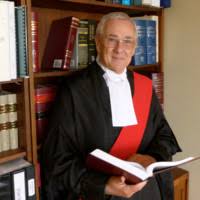
Ret. Judge Lloyd Budzinski weighs in on many subjects.
From the Bench
By Retired JUDGE LLOYD BUDZINSKI
I want to talk abut expert evidence and the Judicial role.
Today we read about different views of psychiatrists as to whether someone had a limiting mind to such a degree that it can afford a defense. In criminal law a person needs to intend his actions, consequences and appreciate what they are doing as wrong.
It is called Mens Rea.
The problem has arisen in other matters associated with a witness’s reliability over time to recall events accurately such as historical incest cases where the complainant is challenged that her recall of the events some 20 years ago, when she was 8, is unreliable. Courts must be very careful how they use this type evidence. It is dangerous and can lead to wrongful convictions or mistaken acquittals.
This matter became significant to me, as a Crown Attorney, when prosecuting a former undercover Police Officer for murdering his wife. We will call him Mr. X. The Crown belief was that he pushed her from the 19th floor of the Palace Pier. He was convicted and sentenced to life imprisonment with no parole for 25 years. The theory was that he had a lover; wanted to marry her and needed money. He recently had purchased an insurance policy for his wife.
The problem is that he had two sweethearts. One with whom he had shared his plans for money. Ms. A and the new one, Ms. B, whom he preferred and wanted to marry. His wife refused a divorce citing she ‘knew too much’ about his criminal behavior as a police officer.
The marriage would silence the new lover but to silence the Ms. A, he needed something else to keep her silent. So, he invited her to his apartment while he confronted his wife. The purpose was to have Ms. B involved with the murder so that she, thinking herself an accomplice, would be too frightened to testify against him. A technique he learned as an undercover officer. Gangs would often ask a newcomer to commit an offence to verify their sincerity to the team.
He was right, when she was originally interviewed by the police she provided no information of what she had witnessed as his wife was pushed from the balcony.
I want to caution the reader, this was the Crown’s theory, alleged by the evidence but what are the facts the jury drew from the evidence to convict him will never be known.
Was it, Ms. A’s testimony or the circumstantial evidence or both, one supporting the other? I like to think it was the last. Juries are not allowed, unlike the U.S., to discuss their reasons. Unlike a judge who must articulate his findings. A jury simply makes a finding “beyond a reasonable doubt that a planned and deliberate murder was committed”.
The police had investigated the case for several months and were ready to lay charges based on a load of evidence, but all circumstantial including: a number of alternative explanations he gave to the police and various friends that were different.
The one to the police was essentially, that “she was on a stool trying to fix a rattle on the ceiling edge, near the railing when he heard a scream and ran to the balcony but she was over the rail as he tried to put his arms around her but she fell, he couldn’t hold on. “
The police had conducted forensic testing, expert evidence, but were never able to verify his statement the time and distance made the defendant explanation impossible.
Of course, there was the classical motive, money and a lover, lovers? At this time, we didn’t know there were two.
Now I started, by talking about expert evidence and have digressed to this example trying to provide some background to The care lawyers and judges must use in dealing with experts to illustrate my point.
Well, it’s going to take longer than I thought. Let’s leave the story here. We will continue next time when I tell how the first lover, months later, came forward. Stay tuned. Feel free to send an email to the newspaper if you have any legal questions for the judge. You can reach him at thesouthetobicokenews.gmail.com
Judge Lloyd Budzinski retired after 28 years and was a former Crown Attorney, Defence Counsel and Ontario’s Assistant Deputy Minister of Criminal Law. He was Chief Prosecutor in the high-profile trial of former RCMP officer Patrick Michael Kelly, who was found guilty of murder for throwing his wife from the 17th floor balcony of their Palace Pier condo in March 1981.