The Salvation Army in Long Branch says it has been hit hard
by COVID-19 and is seeking donations of cash and food to
help area residents in need.
It warns that the demands are high for those using the food
bank, and only five people can be inside the building at one
time. Users are asked to call ahead.
“Many people have been laid off or had their hours cut due to the virus,” says Youth Pastor Jennifer Hibbs. “We also
have many people working at home and their families are not
at school.”
The more than 150-year old organization had its largest fundraising event, the Salvation Army’s Christmas Kettle Campaign, cancelled after three days due to the pandemic.
Hibbs says the Salvation Army is resuming its Community
Lunch that takes place every Wednesday from 11 a.m. to 1
p.m. at the Thirthieth Street facility.
The Salvation Army was founded in London, England in
1865 by Rev. William Booth and his wife, Catherine. The organization started in
Canada in 1882. The Lakeshore Community Church is an amalgamation of the
Long Branch Corps and the Mimico Corps, formerly on Mimico Ave. More than
300 families receives their services monthly and 800 plus families receive Christmas assistance each year from the Long Branch chapter, located at 5 Thirtieth
Street, and can be reached at 416-251-8372. Donations can be left at the church.

SPECIAL-Backyard rinks sprout as pandemic continues to freeze-out amateur sports
By REJEAN CANTLON-Amateur Sports
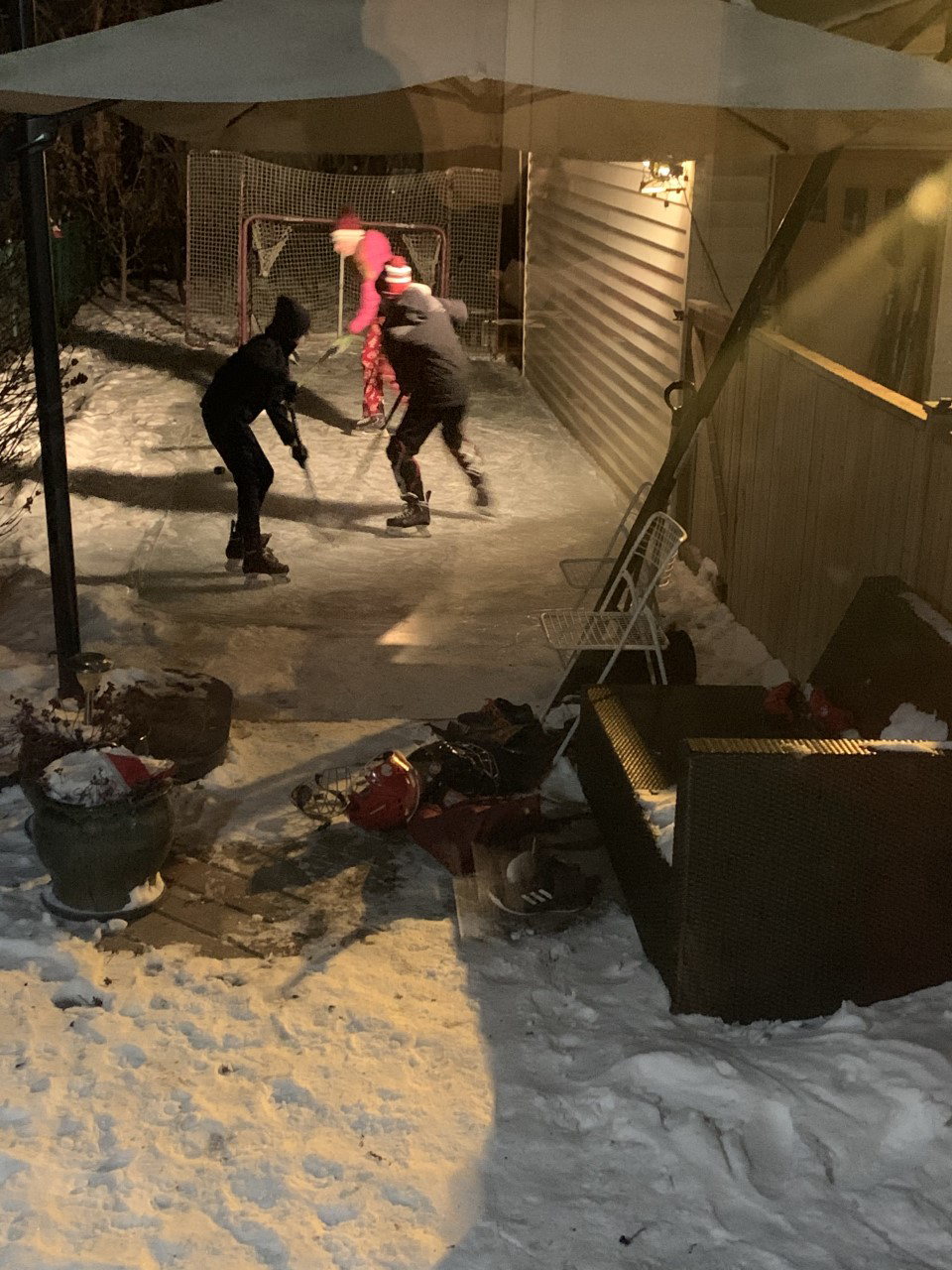
This year is definitely the year of the outdoor rink.
Thanks to the latest cold snap, backyard ice surfaces are popping up all over our neighbourhoods, more so now than ever before due to COVID-19 and lockdown restrictions.
Looking for activities to stay active and fit have been challenging this winter. Getting outside and exercising seem like a logical fix to curb the boredom and monotony of life in-doors.
It can be argued that South Etobicoke families have had more of an opportunity to bond on the ice than ever before, especially being so close to home.
Shane Nuttley-Kirby, his wife and 2 children, Dylan (age 2.5) and Shane Jr. (age 6) are spending countless hours on the rink in their backyard building that bon
Nuttley-Kirby, a professional power skating instructor says, “having the outdoor rink is more about play and less about a learning tool for my boys. Installing the rink was a no-doubter for our family.”
Shane hopes that once the lockdown restrictions ease, they will be able to share their backyard frozen treasure with more children to help them learn how to skate and more importantly, to have fun.
Check out these other backyard hockey hot spots in Etobicoke:
Ontario Jr. Lacrosse heats up as the National Lacrosse League shuts down
By REJEAN CANTLON–Amateur Sports
As the National Lacrosse League (NLL) announce the cancellation of their 2021 season, lacrosse in Ontario’s Jr. ranks is heating up with news of a new league being formed.
The Tewaaraton Lacrosse League (TLL) is the brain-child of Edge Lacrosse founder, Stuart Brown and Six Nations Jr. A General Manager, Jake Henhawk. The Six Nations team announced that they were leaving the 11 team Ontario Lacrosse Association (OLA) last week.
A second private team from Burlington has also announced that they will be joining the TLL. The existing Burlington Chiefs Jr. A team would remain within the OLA.
The reason for the introduction of the new league seems to stem from a lack of support from the OLA to the local Jr A clubs and its ability to groom players hoping to play professionally in the NLL. The OLA is for players aged 21and younger. The TLL is for players 22 and younger and will include adopting the NLL rules.
The OLA voted against increasing the age to U22 at the annual general meeting last November which ruffled the features of some of the Jr. A teams’ brass. The vote was 53% in favour but 2/3 of the vote was needed to make the change.
What does that mean for our Mimico Mountaineers Jr. A team?
Sean O’Callaghan, President of Mimico Jr. A admitted that his organization was approached by the TLL back in December.
After careful consideration, O’Callaghan said it was the right time to take a pass on the TLL and support the existing league under the OLA umbrella.
“At the end of the day, we think that our young athletes still want to compete for the Minto Cup (national amateur championship)”, O’Callaghan said. “The time is right to work together to grow our league.”
He added that perhaps the TLL will allow for better conversations with the OLA and existing team ownership groups. Only time will tell.
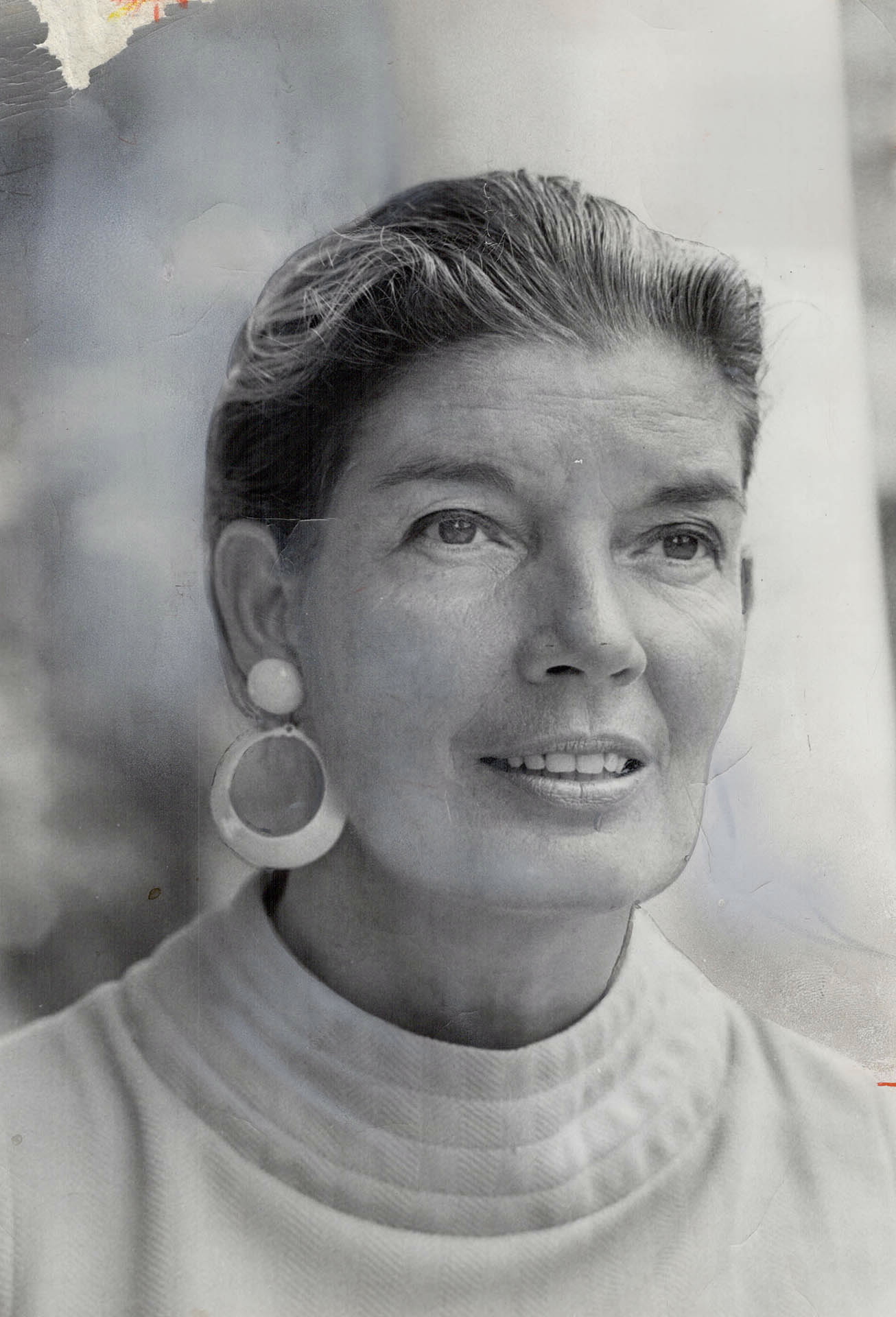
Activist and author June Callwood loved people and Mimico Creek
By DAVE KOSONIC
June Callwood lived much of her life in Etobicoke and is well-known in the community as a prominent and well-respected author, journalist and influential social activist.
Donna Cansfield, a former MPP for Etobicoke Centre, had great admiration for her friend Callwood, who passed away in 2007, due to cancer at age 82. Callwood had bravely refused any treatment for her malignancy.
“The message she leaves behind for everyone but young women in particular is that there are lots of ways to show a passion for your cause,” Cansfield recalled. “June herself was an in-your-face activist in some ways, yet a great support behind the scenes in others.”
At the age of 16 in 1942, Callwood was hired as a young reporter at the Brantford Expositor for a humble $7.50 weekly, but in time moved up the ranks and was recruited as a reporter by The Globe and Mail.
There she met and later married well-known journalist Trent Frayne, but her maiden name always appeared on her story bylines since the newspapers at the time did not hire many married women.
For much of her life Callwood lived in the tree-lined Thorncrest Village area north of Rathburn Road and close to Mimico Creek on Hillcroft Drive. During a 1984 interview Callwood said: “I love my street the access to the creek (Mimico Creek)…it’s a wonderful neighbourhood.”
Callwood made landmark contributions in Etobicoke and the GTA. She was a member of the board of directors at Etobicoke General Hospital and now William Osler Health Centre.
“She was passionate about health care social justice and the community – a great supporter and a wonderful asset,” added Kytas Mickevicius then president and CEO of both hospitals.
She also was a key player in the creation of the June Callwood Centre for Women and Families and Casey House – Canada’s first HIV/AIDS hospice. And along the way she authored 30 books and wrote for high-profile magazines, including Chatelaine.
Callwood in 1978 was appointed to the Order of Canada, the country’s second highest civilian honour. She received a Canadian Journalism Foundation Lifetime Achievement Award in 2004, was inducted into the Etobicoke Hall of Fame and earned her private pilot’s licence at age 70, which she maintained for many years.
She also dealt with many personal challenges in her own life. She and Trent parented two daughters and two sons. Daughters Jesse and Jill are well-respected writers and their elder son is Brent. Casey Frayne was the youngest son and he was killed by an impaired driver in 1982 on Highway 401 while driving home from university.
On a personal note, some of Callwood’s teenagers attended Burnhamthorpe Collegiate Institute when I was a student there back in the day. Mom June regularly drove them back and forth to BCI, as most parents did back then.
Lest we forget Cpl. Dyer and other brave Canadian heroes who were killed in Afghanistan

Cpl. Dyer and his colleagues were killed by so-called friendly fire in Afghanistan almost 19 years ago.
Gone but not forgotten today is Corporal Ainsworth Dyer, his three colleagues, and the thousands of other brave men who gave their lives for our freedoms.
This April will mark 19 years since Toronto’s own Cpl. Dyer, and three others, were taken away from us due to ‘friendly fire’ by a U.S. flight crew in Afghanistan.
Popularly known as “Ains” by his family and friends, Dyer, was born in Montreal but grew up in Regent Park, where was raised by his strict Jamaican grandmother, who instilled in him his culture and a strong sense of right and wrong.
He was a long way from home in a foreign land, when he, and three other Canadian soldiers, were killed on April 17, 2002 by a U.S. bomb fired by anonymous pilots from high above.
The tragedy, which is referred to as The Tarnak Farm Incident, injured eight other soldiers from the 3rd Battalion Princess Patricia’s Canadian Light Infantry (BPPCLI). The men never had a chance as a U.S. F-16 fighter jet piloted by an Air National Guard dropped a laser-guided bomb as they were conducting a night-firing exercise.
The deaths of the soldiers were Canada’s first during the war in Afghanistan and the first in a combat zone since the Korean War. The senseless killings sparked a period of national grief and sorrow from people across the country.
Cpl. Dyer, who was a proud member of the 3rd Battalion was buried with full military honours in the Necropolis Cemetery in Cabbagetown, where his grieving parents, in a touching and emotional moment, released a box of doves. He was only 24.
‘Ains’ was the proud son of the late Paul and Agatha Dyer. He knew at the age of six, as a boy growing up in downtown Toronto that he wanted to serve his country as a soldier.
As others joined hockey or soccer, he enrolled with the 48th Highlanders of Canada in 1996 as an Infantryman and was later transferred to the Regular Force in 1997. After completing Infantry Battle School, he was posted to Princess Patricia’s in 1998, where he served as a Rifleman in Operation Palladium; a peacekeeping mission to Bosnia-Herzegovina in 2000.
A great athlete, Dyer was also a paratrooper who took part in a strenuous Mountain Man military fitness competition, which involved a canoe portage, a 31.6-km footrace and a 10-km river paddle.
“The guy kept it real; there was nothing fake about this guy at all,” recalled Daryl Bonar, a former soldier who served with Dyer and the three others killed. “He never had a bad thing to say about anybody.”
Bonar said Dyer once completed an arduous military Mountain Man race with a broken foot.
“The race involved a long run with a heavy pack sack, portaging a canoe and a final sprint,” he reflected. “He was so determined to finish that he crawled across the finish line.”
After service in Bosnia, the deeply-religious Dyer, and his mates, were deployed to Kandahar, Afghanistan, as part of Operation Enduring Freedom.
Before shipping out, ‘Ains’ had fallen in love and proposed marriage on bended knees to his Edmonton sweetheart, who promptly accepted. However, he never did return home alive.
A plaque bearing the names of Dyer, Sgt. Marc Léger, Pte. Richard Green and Pte. Nathan Smith was placed in a memorial at the Canadian headquarters at Kandahar Airfield. In February 2003, Dyer was commemorated on the Rakkasan Memorial Wall at Fort Campbell, Kentucky.
Family members are proud that one of the 117,000 trees being planted as part of the Highway of Heroes Living Tribute will represent the sacrifice that Cpl. Dyer made to serve and protect Canada.
The Ainsworth Dyer Memorial Bridge in Edmonton and a laneway in the Cabbagetown area of Toronto have been named after the courageous corporal.
Back by demand: The rise and fall of Toronto’s first Black millionaire, James Mink
Black History repeat; Fighter pilot Wally Peters helped to establish famed Snowbirds
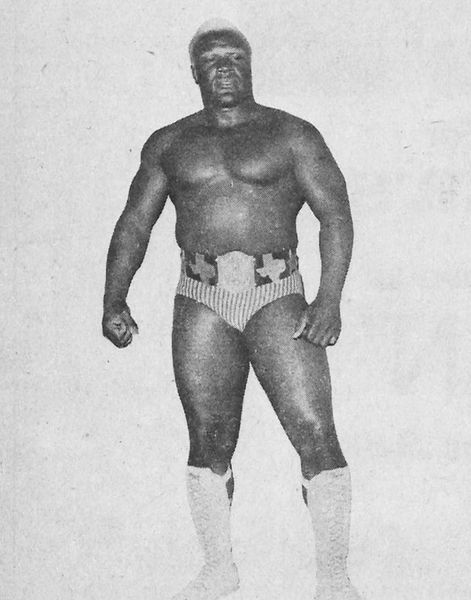
Back by demand; Toronto wrestling fans still love Sweet Daddy Siki and his antics
This fraud ring run by cabbies scammed $2 million from their passengers

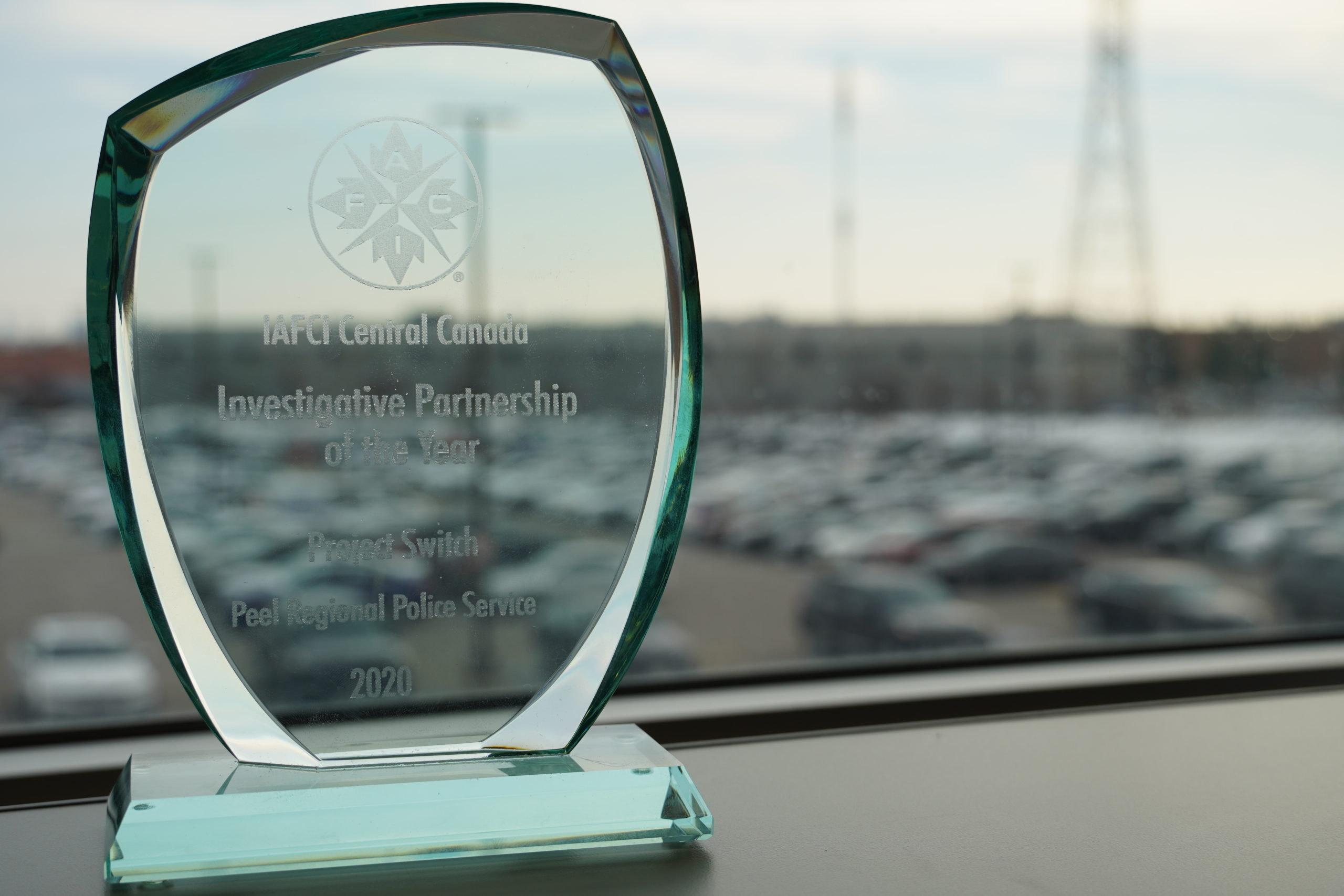
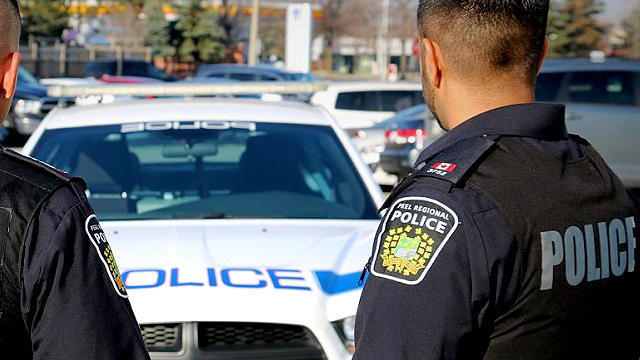
TWO PEEL officers receive award (above) for cracking cabbie fraud ring that scammed 200 plus passengers of $2 million. Police photos.
They cracked a fraud ring run by cabbies accused of ripping off more than 200 of their unsuspecting fares of more than $2 million.
Two Peel Regional Police officers are being recognized by their peers for shattering a ‘Bait and Switch’ scam operated by area taxi drivers.
The officers were presented with an Investigative Partnership of the Year Award 2000 by the International Association of Financial Crimes Investigators for their outstanding work in an investigative project called ‘Switch.’
The lead investigators, who work undercover and are not identified, are both members of the force’s Fraud Bureau Credit Card and Organized Crime team.
The undercover project involved Peel and Toronto Police and various financial institutions.
Police said individuals posing as legitimate taxi drivers would defraud unsuspecting victims using a point of sale terminal designed to capture the victim’s PIN number.
“After the victim entered their PIN, the taxi driver would return a previously exploited debit card to the victim,” police said. It was “usually under the cover of darkness so the victim would not notice.”
Officers said “soon after” the taxi driver or accomplices would deplete the funds in the victim’s bank account.
“Victims often would not discover the switch until they attempted to use card later,” police said.
Detectives said these fraudsters were pretty good.
More than 200 people were allegedly defrauded of more than $2.1 million by the cabbies between January 2019 and March 2020, police said in a release.
Police arrested five culprits and laid 48 criminal charges, which included offences of fraud under $5,000, possession of credit card data and possession of property obtained by crime.
The officers were recognized for their dedication, thoroughness and collaboration in the field of financial crimes in a private event last month.
Toronto Police launches video for young people to know their rights
Its a first. Toronto Police have launched a video for young people so they can better learn and understand their rights.
The force said the video is the first in its Know Your Rights campaign. It was launched at the beginning of Black History Month in February.
The video, produced in partnership with Konvo Media, explains a person’s rights and a police officer’s responsibilities during various interactions.
“Positive interactions between the police and the public are critical to enhancing trust and accountability,” said Chief of Police Jim Ramer. “This is achieved when everybody feels they can speak to police officers but, for some, this is not part of their lived experience.”
The service have been working since 2012 on the Police and Community Engagement Review, also known as PACER, to review procedures and practices relating to interactions between police officers and members of the community.
In 2020, with the 81 recommendations contained in the Toronto Police Services Board report on police reform, Ramer reconstituted the committee into PACER 2.0, to provide advice, support, and hold the Service accountable throughout implementation.
“The street check regulation and the ban on carding were important first steps in addressing racial profiling but it is still so important for everyone, especially young people, to understand what their rights are when approached by police officers,” said committee member, Knia Singh. “These interactions work out better when both sides are informed and respectful.”
Under the leadership of co-chairs Inspector Kelly Skinner and Singh, a sub-committee was formed with a focus to deliver a Know Your Rights campaign.
The PACER 2.0 Committee, co-chaired by Superintendent Stacy Clarke and Audrey Campbell (Jamaican Canadian Association), is comprised of both officers and civilian members including Acting Deputy Chief Myron Demkiw, Superintendent Pauline Gray, Inspector Kelly Skinner, Yvette Blackburn (Global Jamaica Diaspora Council, GJDC – Canadian Representative), Jennifer Chambers (Executive Director, Empowerment Council), Dave D’Oyen, Stephen Linton, Stephen McCammon (Legal Counsel, Office of the Information and Privacy Commissioner of Ontario), John O’Dell and Knia Singh (Principal Lawyer, Ma’at Legal Services).
The video is the first phase of the Service’s ongoing commitment to working with PACER 2.0, young people, and other community organizations on future campaigns that reflect community concerns and speak to a variety of lived experiences and interactions between the public and police officers.
For more news, visit TPSnews.ca.