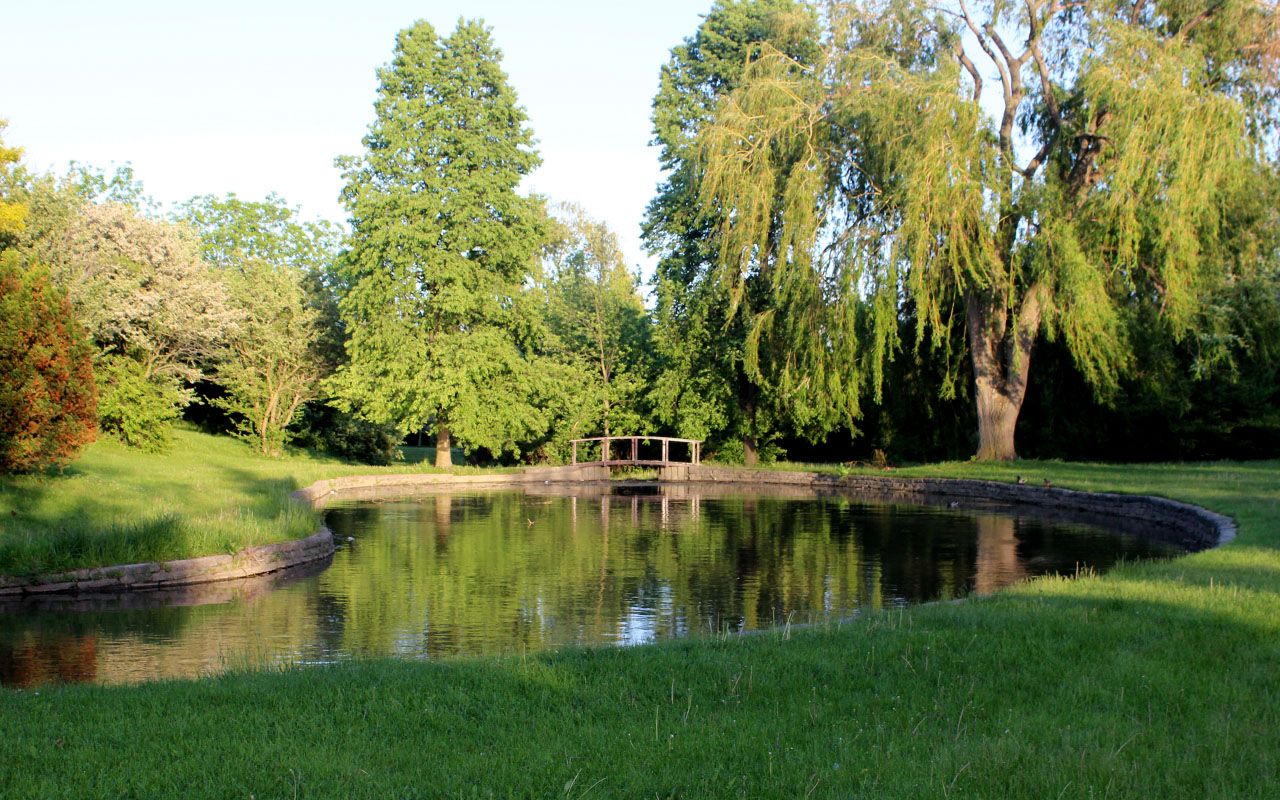
The City of Toronto has been designated Tree City of the World for the fifth consecutive year. This is scene from Centennial Park.
South Etobicoke residents love our trees, some of which are more than a century old.
It is no surprise that the City of Toronto has been recognized by the United Nations as a Tree City of the World with more than 11 million trees and plans for a 40 per cent canopy cover by 2050.
The UN Environment Programme’s General Restoration has designated Toronto as a Tree City of the World for the last five consecutive years, according to a City staff report.
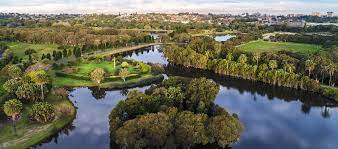
The City plans to have a 40 per cent tree canopy by 2050.
“Toronto is a recognized leader in urban forest management and biodiversity conservation,” according to the Executive Director of Environment, Climate and Forestry Department.
The designation by the Arbor Day Foundation and the Food and Agriculture Organization of the UN “recognizes the City’s commitment to ensuring sustainable and healthy urban forests, protecting local ecosystems and enhancing its resilience to climate change.”
The tree report will be reviewed by an Infrastructure and Environment Committee on February 26 and considered by City Council at its meeting on March 26, 27 and 28.
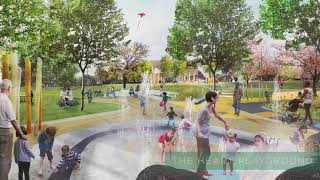
Kids having fun in the water parks and beauty of growing trees.
The report said Toronto’s urban forest consists of over 11.5 million trees and provides ecosystem services as creating oxygen and removing pollutants from the air, reducing energy costs, improving water quality and mitigating extreme heat.
Trees also ‘provide food and habitat for the many birds, insects, amphibians, and mammals which contribute to the city’s biodiversity.’
It stated many cities invest in greening plans, strategies and actions which promote urban forests as nature-based solutions for thermal regulation, such as New York, Seattle, Paris, Melbourne and London.
City Council is committed to achieving a 40 per cent canopy cover by 2050, using a tree equity approach to grow trees where they are needed most, ensuring that all Torontonians enjoy the benefits of a healthy and resilient urban forest.
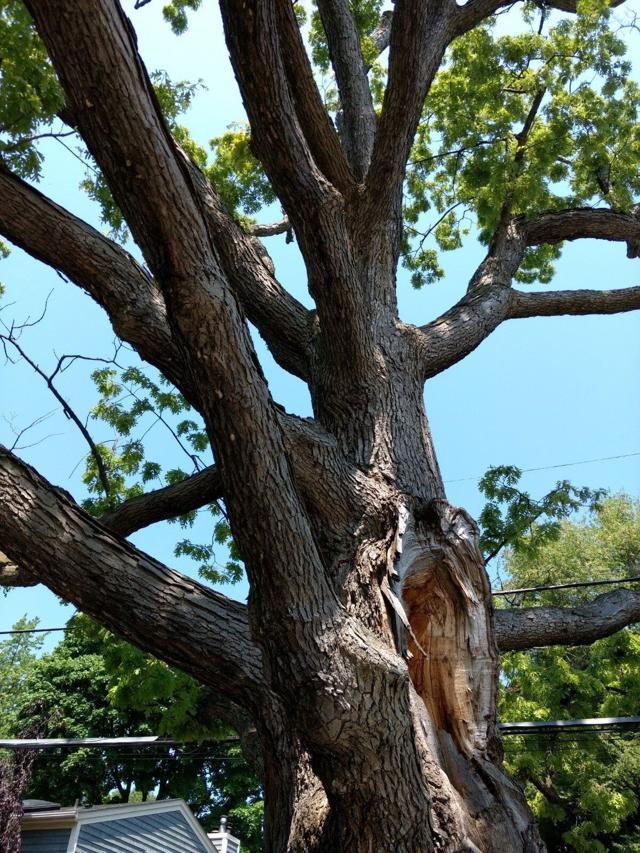
One of the oldest trees in South Etobicoke is more than 100 years old and was trimmed last year.
The Infrastructure Committee is asked to devise a plan this year to protect and enhance Toronto’s tree canopy as ‘climate change intensifies, with particular attention to the importance of trees in reducing the adverse effects of extreme heat on children, seniors and other vulnerable populations.’
The changing climate is partially blamed for the major floods and forest fires that we had last year and previously, officials said.
Toronto’s trees are essential to the city’s green infrastructure and provide cooling benefits, through evapotranspiration and shade provision, as well as carbon sequestration, air pollution mitigation, wildlife habitat and stormwater management.
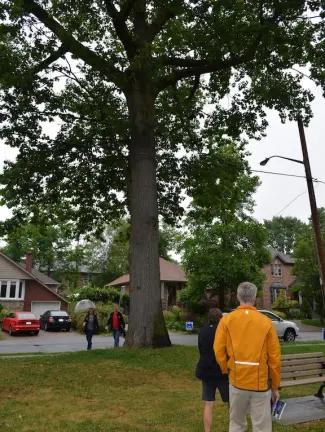
Another of the more older trees of the many still thriving in Long Branch.
The report said the urban forest contributes over $55 million annually in ecosystem services, including $8.3 million in energy savings, $4.0 million in gross carbon sequestration, $37.9 million in pollution removal, and $4.8 million in avoided runoff.
A joint study by the Canadian Institute for Climate Choices and Smart Prosperity Institute noted that from 1990-2018, urban trees removed an average of 2.4 million tons of greenhouse gases (GHG) annually and contributed to GHG emission reductions by reducing heating and cooling needs in adjacent buildings.
“Urban trees offer health benefits by reducing heat-related illnesses, as trees can lower temperatures by up to 12 degrees Celsius while providing shade and reducing exposure to harmful ultraviolet rays,” according to the study.
City staff have planted more than 13,000 trees on public land, created a Tree Seed Diversity Program to restore areas with native plants and introduced regular tree maintenance for young trees which have a survival rate of 93 per cent.