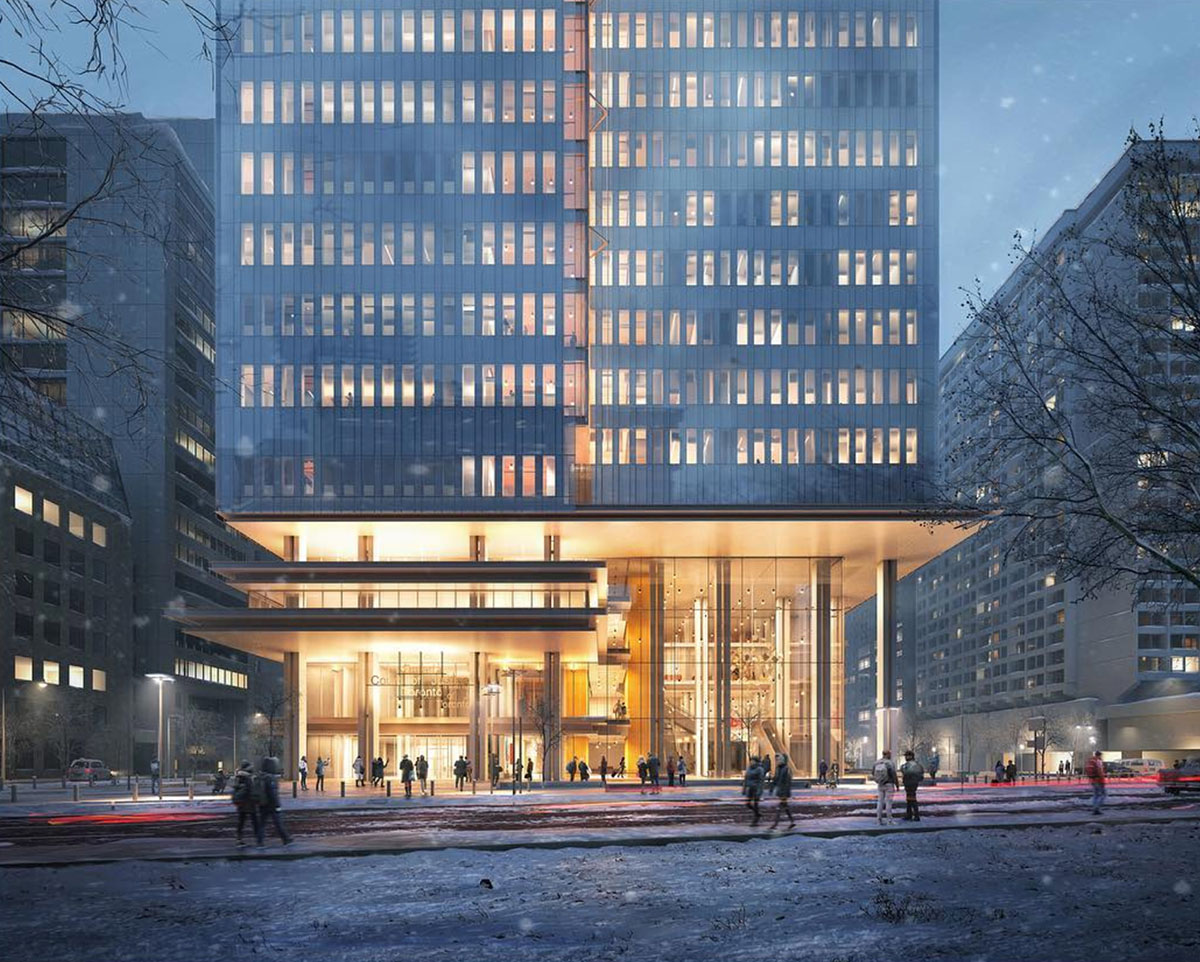
NEW SUPERCOURT being built to merge with six others in downtown Toronto. Courtesy photo.
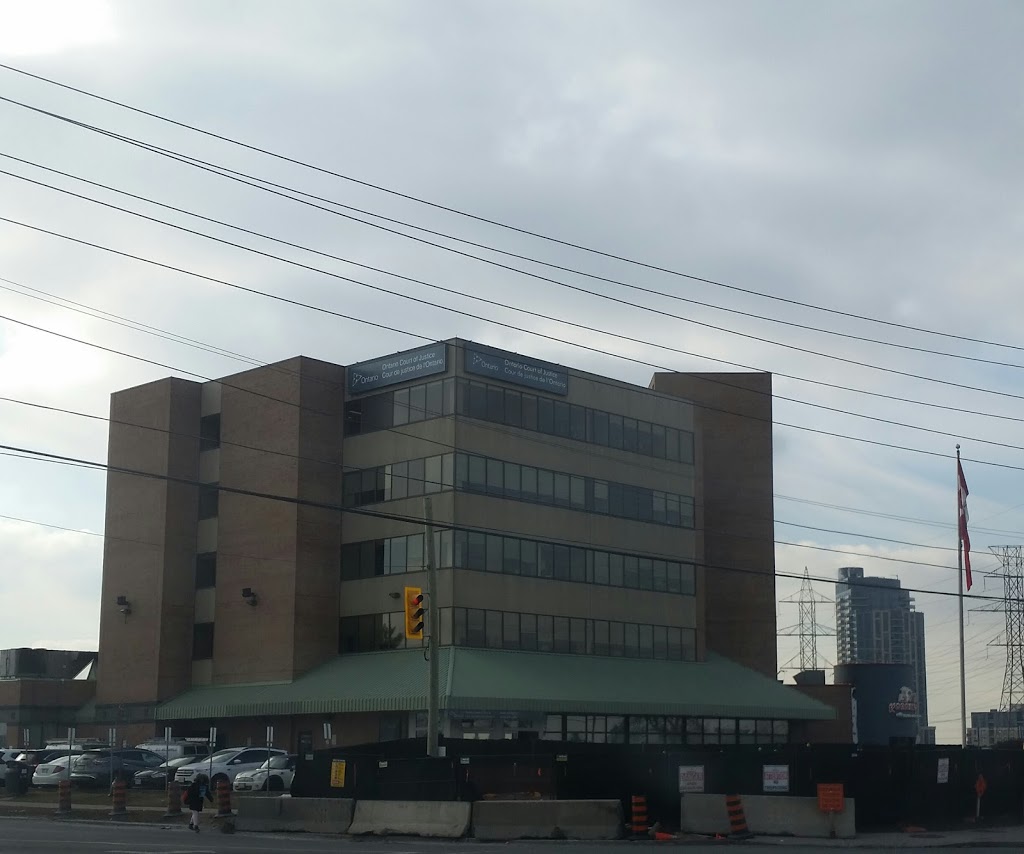
NORTH ETOBICOKE criminal court at 2201 Finch Ave. W. is very busy.
Etobicoke residents will be hit hard with travel time and the costs of parking when six Toronto courthouses are merged into a downtown ‘supercourt.’
Toronto lawyers and court workers are warning the Ford government about the dangers of moving all six of Toronto’s criminal courthouses across the city into one building downtown.
The justice service providers say that it’s bad for everyone involved: victims of crime, witnesses, accused people, court workers, and the neighbourhoods where Toronto’s six courthouses are currently located.
Toronto City Council has echoed their concerns, citing impacts on neighbourhood businesses and access to justice for residents of neighbourhoods where courthouses will be closing.
Construction has begun for a massive 63-courtroom building in the heart of downtown Toronto. The courthouse will cost nearly $1 billion to build and will be 17 storeys tall. It will be the new hub for adult and youth criminal operations, merging six Ontario Court of Justice locations in the Toronto area.
The new courthouse will be located at the corner of Dundas Street West and University Avenue, an area that is densely populated with government buildings including the Supreme Court and the Court of Appeal, which makes it a “potential target for extremist threats and/or events.”
The courthouse will reportedly be built and operational by 2022.
Etobicoke, Scarborough, and North York residents will face a choice between hours on public transit, or exorbitant parking costs downtown to attend court. The only additional parking being added will be for judges and crown managers. It will make it harder for many people who are racialized or living in poverty to navigate the justice system, the justice workers argue.
Neighbourhood businesses who depend on customer traffic generated by the six courthouses will take a hit to their sales and services when the courthouses close.
Public safety concerns were also raised in an internal report by the Toronto Police Service about rival gang members from different areas of the city being forced to attend one centralized court location at the same time, possibly meeting up on public transit on the way there, increasing the risk of gun violence at the new location and on the TTC.
Justice service providers are also concerned that the new courthouse building itself won’t be able to expand as Toronto’s population expands. It will only have four elevators servicing 63 courtrooms and more than 2,000 people daily. It will be impossible to physically distance during this pandemic or any future public health emergencies, and an outbreak at one central court location would shut down justice for the entire city.
The concerned legal professionals and court workers argue that it would be much better for community access, for public safety and public health to keep local courthouses open in neighbourhoods across the city.
The unions and associations who represent the lawyers and court workers opposing these changes are the Society of United Professionals, the Ontario Crown Attorneys’ Association, OPSEU/SEFPO and the Toronto Lawyers Association.