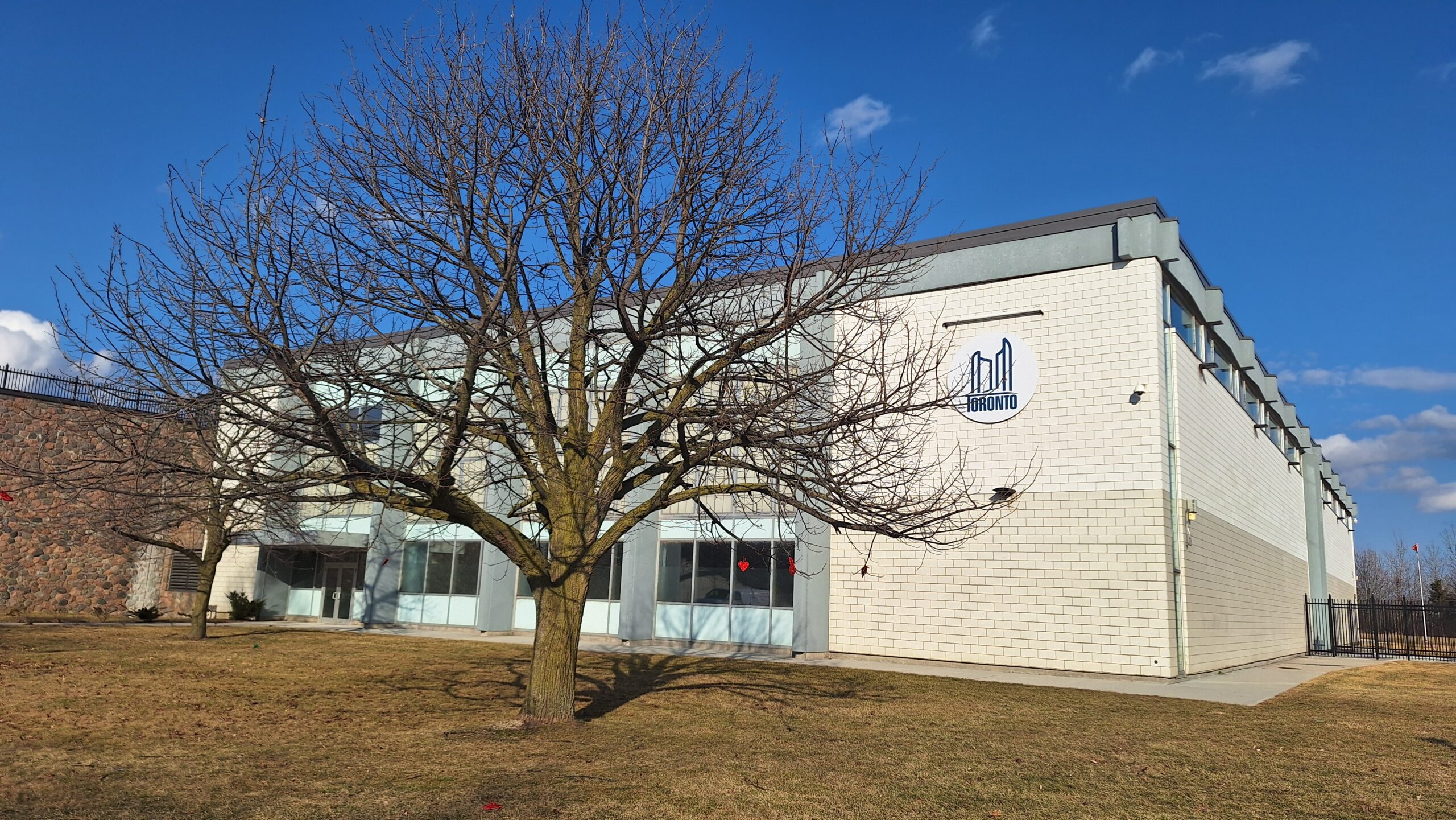
Section of the R.C. Clarke Filtration Plant on Twenty Third Street where 254 trees are slated to be removed in an expansion. Photo by Suzie Basheir.
Some 254 trees are proposed to be cut down with the construction of a new building to expand the R.C. Clarke Filtration Plant in Long Branch, according to a study and a local wildlife group.
The building will be located on the eastern side of Pumping Station at the filtration plant site, at 45 Twenty Third Street, near the western boundary of Samuel Smith Park.
“The building will be located on their property in the south-east corner of the large open space south of the dog park,” according to a newsletter by the Friends of Samuel Smith Park (FOSS). “It will house a new generator system which will be used to power the operations of the existing water treatment facility.”
The water filtration plant is expanding to process more clean water for Toronto and York region.
The group said the generator system will be connected to the electrical distribution system inside the buildings via a buried duct and a service driveway will be built over top of the duct bank along the east side of the property.”
The existing generators are more than 60-years-old and it is difficult to find parts for maintenance. The new generators will provide sufficient electrical capacity to power the plant for up to 72 hours during a utility power outage and to reduce energy costs when utility power is available.
Construction is due to start in the winter or spring of 2025. The facility will provide more clean water required in the growing Toronto and York Region.
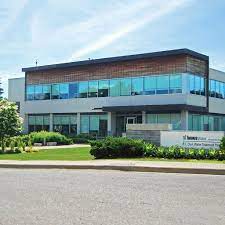
The plant has been in operation for about 60 years and two generators have to be replaced.
The group said of the proposed 254 trees to be removed from the property, 19 may face injury and only 15 replacement plantings are required by Toronto Forestry private property bylaws since all the trees are small, being less than 30-centimetres in diameter and 1.4-metres in height.
“It does appear that the small woodlot just northeast of the dog park will be gone as well as a portion of the woodlot at the south-east end of their property inside their boundary fence,” the FOSS newsletter said, adding no public consultations seems to be planned.
“Replacement trees will be planted south and west of the plant as well as some new plantings alongside the service road,” according to FOSS. “Some of the impacted areas mentioned above will no doubt have an effect on natural space and wildlife habitat in the park’s adjacent environs.”
More than 250 trees will have to be removed as part of the expansion, with only less than 20 to be replanted.
FOSS said ‘trees selected for removal pose a barrier to construction or are not healthy and may pose a hazard.’
“Trees selected for injury may be encroached upon and require pruning; however, permanent adverse affects are not expected,” according to the newsletter.
“Planted trees shall be in good condition with healthy roots and no damage or presence of disease, and shall have a healthy caliper (minimum 50-mm), preferably balled and burlapped,” the group wrote. “Selected trees shall be native and planted as soon as possible after construction has finished, within locations within locations proximal to the affected areas.”
The survey said replacement trees shall be watered with deep, infrequent soakings for at least two years during the dry season. Follow-up inspections shall be carried out to confirm species growth and health.
The R.L. Clark Water Treatment Plant (WTP) is one of four water treatment plants operated by the City of Toronto’s Water Division, according to the facility.
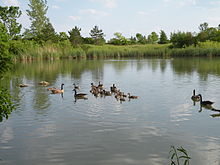
Officials said provisions will be made to protect nestling or migrating birds and other wildlife.
The plant operates year-round to supply water 24 hours a day, 365 days a year. It is a conventional water treatment plant that began operation in 1968. The current average daily production at the plant is 356 m Megaliters per day,egaliters per day (MLD), with a maximum capacity of 615 MLD, supplying treated water for residents and businesses across the City of Toronto and York Region.
The company also has a plan for nesting and bird migration once the trees have been removed.
To avoid harm to birds, it is recommended that trees and any other vegetative removals are planned outside of the nesting period from April 1 to August 31. If vegetation removals cannot occur outside this period, a qualified biologist will perform detailed nest sweeps and provide applicable mitigation as required.