
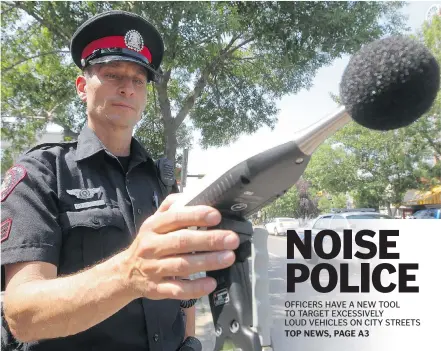
Some U.S, cities have already begun using police to crack down on loud City noises.
A City report is calling for a Dedicated Noise Team of by-law officers or ‘noise cops’ to crack down on the increasing amount of construction and other noise in Toronto.
The By-Law Enforcement Officers will be armed with devices to measure the levels of noise from construction sites, vehicles and home air conditioners and issue tickets if it is over mandated limits.
The report if approved will see increased fines for noise, or mobile noise radar guns erected in noisy areas of the City, which can be monitored and tickets issued for loud vehicles by the Dedicated Noise Team.
The OPP and Toronto Police will also be called to help monitor and squash the noise.
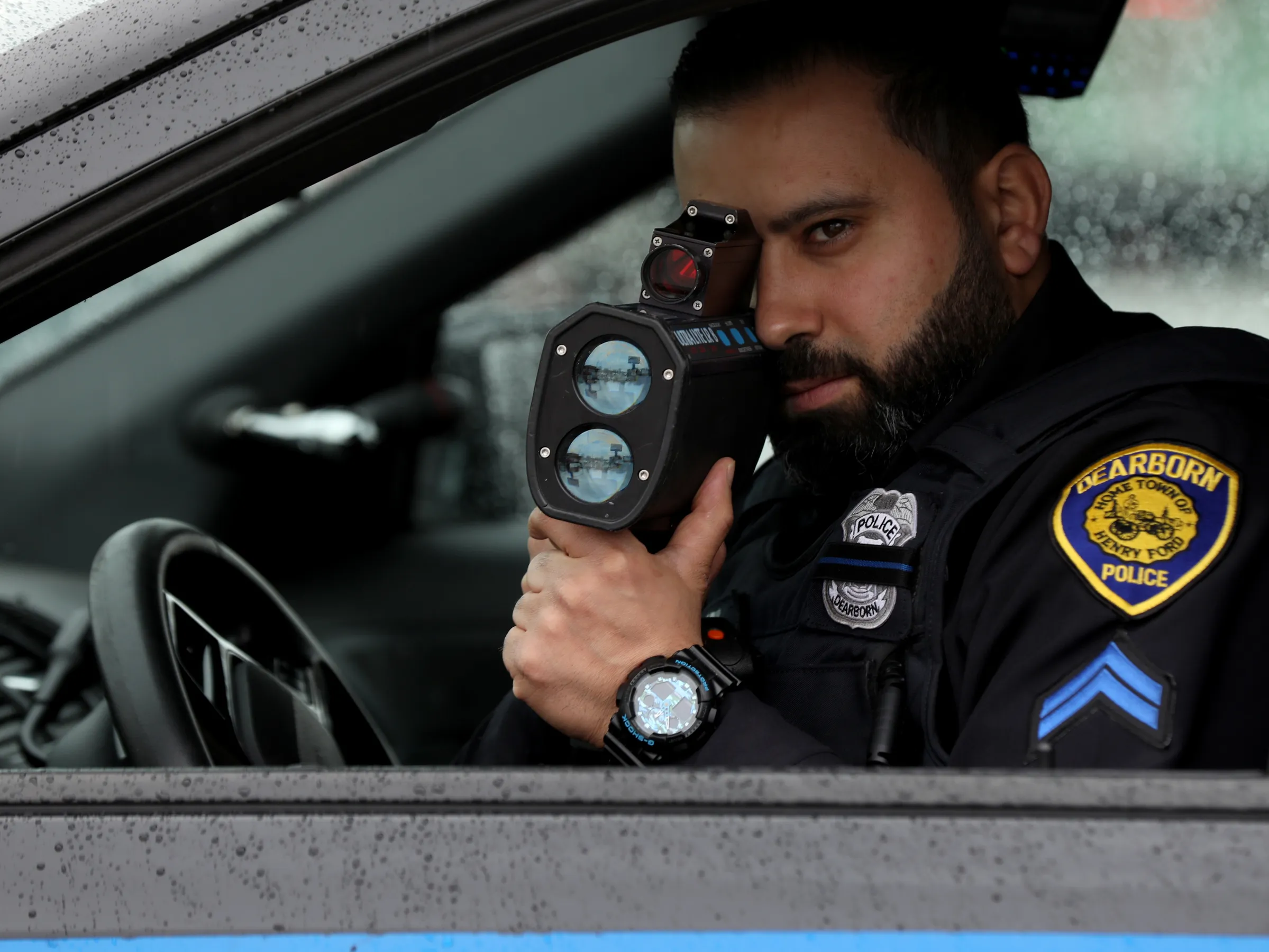
This officer is nabbing motorists by using a radar noise gun, rather than one that detects speed.
Toronto Police will be able to ticket for loud City noise and the OPP will be given powers to test the loudness of vehicles on the Gardiner Expressway and Don Valley Parkway, once details are worked out with the Government of Ontario.
Residents can also be ticketed for noise from a stationery vehicle as sounding a horn or revving an engine ‘or any sound that is clearly audible at a point of reception,’ according to the report to be presented to City Council on February 6.
Residents also face fines for loud air conditioners to be measured by by-law officers with noise measuring guns.
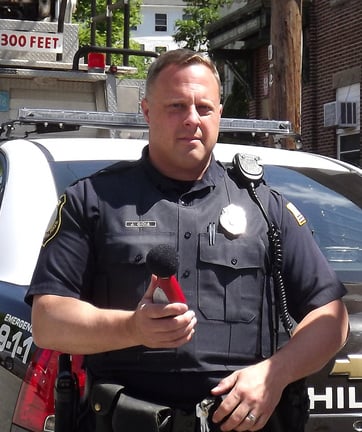
This officer is using a small, mobile noise radar device to pick up loud vehicles.
Sound limits will range from 45 decibels from 11 p.m. to 7.a.m. or 50 decibels from 7 a.m. to 11 p.m.
People can be exempted from loud noise citations providing they obtain a permit certified by a professional engineer or acoustical consultant.
The report said provincial environmental noise guidelines will be updated to provide clear communications to the public and industry regarding the province’s role and authority.
The City said the provisions if approved will take effect by June this year and the sound level guidelines includes; 13 to 16 decibels for amplified sound, 17 decibel for construction noise, 18 to 19 for motor vehicles, stationary sources or residential air conditioners, 20 for unreasonable and 21 for persistent noise.
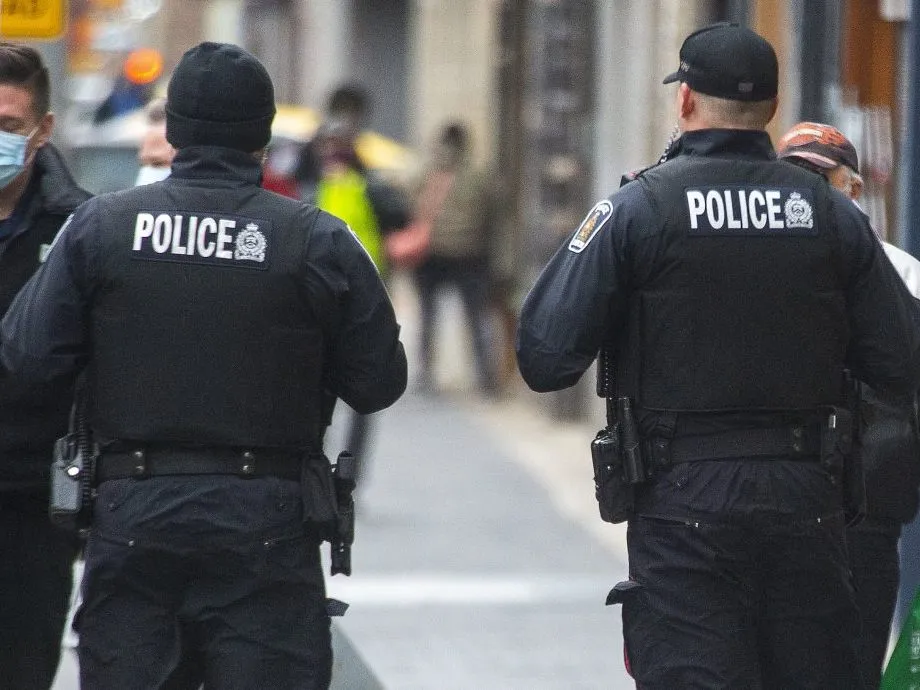
Toronto Police and the OPP will be allowed to check the levels of noise and lay tickets for noisy vehicles or air conditioners.
It said a full-time Coordinator will be hired to lead the Dedicated Noise Team, who will work in the City’s By-law Enforcement, Municipal Licensing and Standards Division.
“In a City as large and vibrant as Toronto, certain levels of noise are reasonable and reflect life in a densely populated city,” according to a summary by the City. “The (noise) by-law works to set out clear and enforceable noise rules across the City, while providing flexibility to meet local needs.”
It said there should be a pathway for residents to submit complaints on waste collection noise and for City staff to communicate with industry on persistent noise issues.
The report called for the provincial government to change legislation to allow for the City’s use of automated noise radar when the technology is ready.
“Managing and regulating noise is a complex undertaking and proposed changes attempt to maintain the balance of multiple competing interests of people living, working, and visiting the city,” the report stated.
It said research conducted on behalf of the City in 2023, shows that 51 per cent of residents believe that noise levels in Toronto are reasonable, while 49 per cent believe more needs to be done to restrict noise levels ‘because of potential negative health consequences and impacts to quality of life and well-being.’