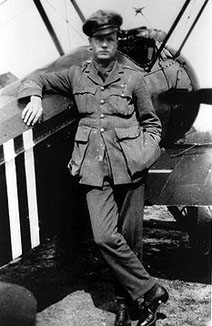
TOP CANADIAN flying Ace Raymond ‘Collie’ Collishaw. Royal Air Force photos.
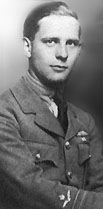
CANADIAN ACE Alfred Clayburn Atkey.
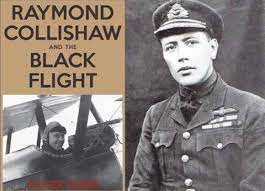
ACE COLLISHAW’s plane was called Black Maria. A squadron was named after the warplane.
Two of Canada’s top flying aces in WWI had strong ties to South Etobicoke and the Curtiss Flying School near Marie Curtis Park almost 100 years ago.
Top shooters and fighter pilots Afred Clayburn Atkey and Raymond ‘Collie’ Collishaw it is said honed their aerial fighting skills while practicing at the Long Branch Aerodrome, which was part of the Curtiss Flying School, located just west of Marie Curtis Park. The school operated from 1915 to 1919.
Collishaw, 82, who had 60 aerial victories, was a distinguished Canadian fighter pilot, squadron leader, and commanding officer who served in the Royal Naval Air Service (RNAS) and later the Royal Air Force.
He was the highest scoring RNAS flying ace and the second highest scoring Canadian pilot during WWI.
Collishaw in retirement researched First World War aerial history and corresponded widely with former pilots, historians and enthusiasts
His memoir Air Command, A Fighter Pilot’s Story was published in 1973.
Collishaw died in September 1976 in West Vancouver at the age of 82.
He was widely noted as a very competent and charismatic leader, in all his various capacities. He emphasized camaraderie amongst his men, socializing, and humour.
The Royal Canadian Air Cadets 205 Collishaw squadron, was named after him in his hometown of Nanaimo, and the 204 Black Maria Squadron, was named after his aircraft.
He became a commissioned officer in the Royal Air Force (RAF), seeing action against the Bolsheviks in 1919-20, and subsequently commanding various Air Service detachments. During WWII he commanded No. 204 Group, which later became the Desert Air Force in North Africa, achieving great success against the technologically superior Italian Air Force. He retired in 1943.
A terminal at Nanaimo Airport was named the Nanaimo-Collishaw Air Terminal in his honour in October 1999.
Atkey, 77, of Toronto, was a Canadian First World War flying ace, who was credited with 38 aerial victories, making him the fifth highest scoring ace.
“All those above him flew in single-seat fighters,” whereas Atkey gained his victors in heavier two-seat aircraft, becoming the highest scoring two-seater pilot of the war,” according to military records.
The pilot at one time was a reporter for the Toronto Evening Telegram newspaper.
Atkey died in Toronto in 1971 and is buried in Springcreek Cemetery, Mississauga.
He enlisted in the British Army and commissioned as a Second Lieutenant on the Royal Flying Corps. He took part in many aerial fights and with gunny-observer Lt. Chargles George Gass took part in a historic dogfight known as the “Two Against Twenty,” when they battled 20 German enemy scout aircraft
Atkey was awarded the Military Cross and a Bar to the award.
Garfield Ingram, of The Great War Flying Museum, said both pilots are believed to have had links to South Etobicoke and were among the best in the country.
Some replica WW1 aircraft can be seen on the museum’s website at www.greatwarflyingmuseum.org
The Great War Flying Museum, operated by the Ontario Aviation Historical Society, is a not-for-profit volunteer member organization that is based at the Brampton Caledon Airport. They can be reached at 905-838-1400.